
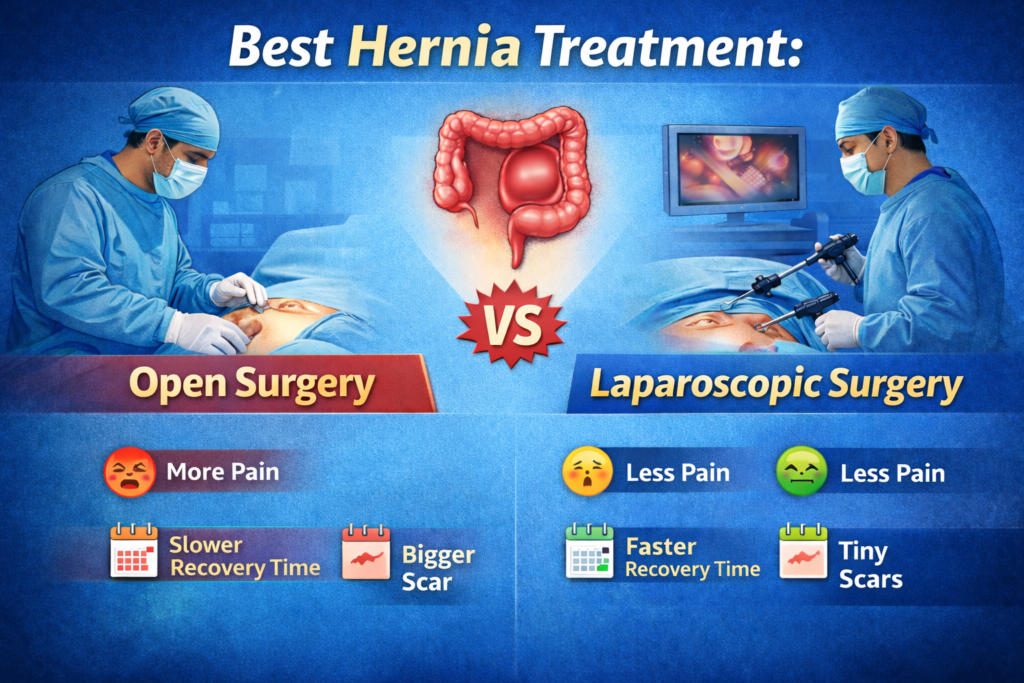
Hernia is a common medical condition that affects many people, especially adults. It can cause discomfort, pain, and sometimes serious complications if not treated on time. The good news is that modern medical advancements have made hernia treatment much safer and more effective.
Today, patients have two main surgical options: open surgery and laparoscopic surgery. Understanding the difference between these two procedures can help you choose the best treatment.
If you are looking for an experienced Laparoscopic Surgeon in Kota, Dr Dinesh Jindal at Jindal Hospital Kota provides advanced surgical care for hernia and other abdominal conditions. With more than 20 years of experience in laparoscopic surgery, he has successfully treated many patients using modern minimally invasive techniques.
In this article, we will explain what a hernia is, its symptoms and causes, and compare open surgery vs laparoscopic surgery so that patients can better understand their treatment options.
What is a Hernia?
A hernia occurs when an internal organ or tissue pushes through a weak area in the surrounding muscle or connective tissue. This often appears as a bulge or lump under the skin, usually in the abdomen or groin area.
Hernias do not heal on their own. Over time, they may become larger and more painful. In many cases, surgery is the only permanent treatment.
Patients searching for Hernia Surgery in Kota should consult a qualified specialist to determine the best treatment method.
Common Types of Hernia
Different types of hernias can occur depending on the location of the weakness in the muscles.
1. Inguinal Hernia
This is the most common type of hernia and occurs in the groin area.
2. Umbilical Hernia
This occurs near the belly button and is common in both infants and adults.
3. Incisional Hernia
This type develops near a previous surgical scar where the abdominal wall becomes weak.
4. Hiatal Hernia
This occurs when part of the stomach moves upward into the chest through the diaphragm.
A proper diagnosis from an experienced Laparoscopic Surgeon in Kota is important to determine the correct treatment.
Symptoms of Hernia
Hernia symptoms may vary depending on the type and severity of the condition.
Common symptoms include:
- A visible lump or bulge in the abdomen or groin
- Pain or discomfort while lifting heavy objects
- Burning or aching sensation near the bulge
- Feeling of heaviness in the abdomen
- Pain during coughing, bending, or standing
- Weakness or pressure in the affected area
Sometimes the bulge may disappear when lying down but reappear while standing.
If these symptoms persist, it is important to consult a specialist for Hernia Surgery in Kota before complications develop.
Causes of Hernia
Hernias usually occur due to muscle weakness combined with pressure inside the abdomen.
Common causes include:
- Heavy lifting
- Chronic coughing
- Constipation and straining during bowel movements
- Obesity
- Aging and muscle weakness
- Pregnancy
- Previous abdominal surgery
Lifestyle factors and physical strain can increase the risk of developing a hernia.
When Does Hernia Surgery Become Necessary?
In the early stages, a hernia may cause mild symptoms. However, over time the condition usually worsens.
Surgery becomes necessary when:
- The hernia becomes painful
- The bulge increases in size
- Daily activities become difficult
- There is a risk of strangulation, where blood supply to the tissue is cut off
Strangulated hernia is a medical emergency and requires immediate surgery.
Consulting an experienced Laparoscopic Surgeon in Kota helps ensure timely and safe treatment.
Treatment Options for Hernia
The only permanent solution for hernia is surgery. There are two main types of surgical procedures used today.
- Open Hernia Surgery
- Laparoscopic Hernia Surgery
Both procedures aim to repair the weakened muscle and place a surgical mesh to strengthen the area.
Let us understand the difference between these two approaches.
Open Hernia Surgery
Open surgery is the traditional method used for hernia repair.
How Open Surgery Works
- A single larger incision is made near the hernia.
- The protruding tissue is pushed back into place.
- The weakened muscle is repaired.
- A surgical mesh is often placed to strengthen the abdominal wall.
Advantages of Open Surgery
- Effective for large or complicated hernias
- Widely available
- Can be performed under local or spinal anesthesia in some cases
Limitations of Open Surgery
- Larger incision
- More post-surgery pain
- Longer recovery time
- Bigger scar
Because of these factors, many patients today prefer laparoscopic hernia surgery.
Laparoscopic Hernia Surgery
Laparoscopic surgery is a modern minimally invasive technique used for hernia repair.
Instead of one large cut, the surgeon makes small incisions and uses a camera (laparoscope) to perform the surgery.
How Laparoscopic Surgery Works
- Small cuts are made in the abdomen
- A laparoscope with a camera is inserted
- Surgical instruments repair the hernia
- Mesh is placed to strengthen the muscle wall
This method allows the surgeon to operate with high precision while minimizing tissue damage.
At Jindal Hospital Kota, Dr Dinesh Jindal performs advanced laparoscopic hernia surgeries using modern equipment and techniques.
Open Surgery vs Laparoscopic Surgery
Understanding the differences between the two procedures can help patients make informed decisions.
1. Pain After Surgery
Open Surgery
- More pain due to larger incision.
Laparoscopic Surgery
- Less pain because the incisions are small.
Patients often prefer laparoscopic procedures when treated by an experienced Laparoscopic Surgeon in Kota.
2. Recovery Time
Open Surgery
- Recovery may take 3–6 weeks.
Laparoscopic Surgery
- Most patients recover within 1–2 weeks.
This faster recovery allows patients to return to daily activities sooner.
3. Hospital Stay
Open Surgery
- Patients may stay longer in the hospital.
Laparoscopic Surgery
- Many patients are discharged within 24–48 hours.
4. Scarring
Open Surgery
- Leaves a larger visible scar.
Laparoscopic Surgery
- Minimal scarring due to tiny incisions.
5. Risk of Complications
Open Surgery
- Slightly higher risk of infection due to larger wounds.
Laparoscopic Surgery
- Lower risk of infection and faster healing.
6. Success Rate
Both surgeries are highly effective when performed by an experienced surgeon.
However, laparoscopic surgery offers additional advantages such as:
- Faster recovery
- Less pain
- Smaller scars
- Early return to work
This is why many patients prefer laparoscopic Hernia Surgery in Kota today.
Importance of Choosing an Experienced Surgeon
Hernia surgery requires proper diagnosis, surgical skill, and post-operative care.
Choosing an experienced specialist ensures:
- Accurate evaluation
- Safe surgical procedure
- Reduced complications
- Faster recovery
At Jindal Hospital Kota, surgeries are performed by Dr Dinesh Jindal, a highly experienced Laparoscopic Surgeon in Kota with more than 20 years of experience in laparoscopic surgery.
His expertise and use of modern surgical technology help provide effective and safe treatment for hernia patients.
Other Surgical Treatments Available at Jindal Hospital Kota
Apart from hernia surgery, Jindal Hospital Kota also provides treatment for several other conditions using advanced surgical techniques.
These include:
- Gallbladder Surgery in Kota
- Piles Treatment in Kota
- Treatment for fissure and fistula
- Other laparoscopic abdominal surgeries
Patients benefit from modern minimally invasive procedures that ensure faster recovery and improved comfort.
When Should You Consult a Doctor?
You should consult a specialist if you notice:
- A lump in the abdomen or groin
- Persistent abdominal pain
- Discomfort while lifting or bending
- Increasing swelling
- Pain during coughing or standing
Early diagnosis and treatment can prevent complications and make surgery simpler.
If you are experiencing these symptoms, consult an experienced Laparoscopic Surgeon in Kota as soon as possible.
Conclusion
Hernia is a common condition, but it should not be ignored. Without treatment, it can gradually worsen and lead to serious complications.
Both open surgery and laparoscopic surgery are effective treatments. However, laparoscopic surgery has become increasingly popular due to less pain, smaller incisions, faster recovery, and minimal scarring.
With modern technology and expert surgical care, hernia treatment has become much safer and more comfortable for patients.
At Jindal Hospital Kota, Dr Dinesh Jindal, with over 20 years of experience in laparoscopic surgery, provides advanced treatment options for patients suffering from hernia and other abdominal conditions.
Consult Jindal Hospital Kota for Hernia Treatment
If you or your loved ones are experiencing symptoms of hernia, do not delay treatment.
Consult Dr Dinesh Jindal, a trusted Laparoscopic Surgeon in Kota, at Jindal Hospital Kota for expert diagnosis and the most suitable treatment option.
Whether you need Hernia Surgery in Kota, Gallbladder Surgery in Kota, or Piles Treatment in Kota, the team at Jindal Hospital Kota is committed to providing safe, modern, and patient-friendly surgical care.
Book your consultation today and take the first step toward a healthier life.