
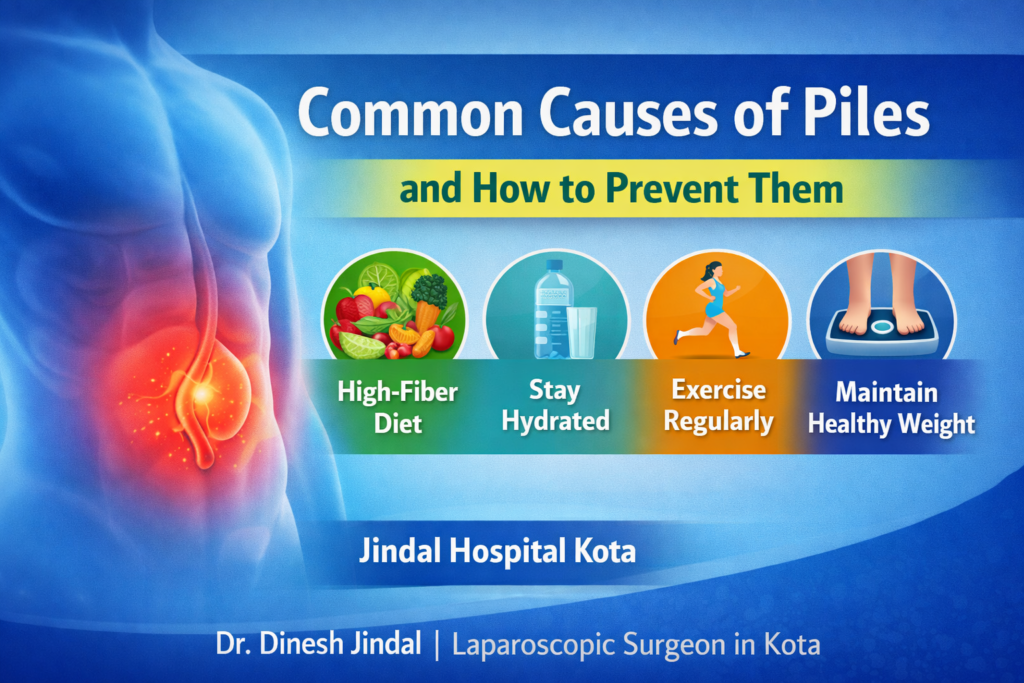
Piles, also known as hemorrhoids, are a common health problem that many people feel uncomfortable talking about. However, ignoring the symptoms can lead to pain, discomfort, and complications over time. The good news is that piles can often be prevented with simple lifestyle and dietary changes.
In this blog, we will explain the common causes of piles and how you can prevent them through healthy habits. If needed, expert care such as Piles Treatment in Kota is available at trusted centers like Jindal Hospital Kota.
What Are Piles?
Piles are swollen veins in the lower rectum or around the anus. They can be internal (inside the rectum) or external (under the skin around the anus).
Common symptoms include:
- Pain or discomfort while sitting
- Bleeding during bowel movements
- Itching or irritation
- Swelling around the anus
If symptoms persist, consulting an expert like Dr Dinesh Jindal is highly recommended.
Common Causes of Piles
Understanding the causes is the first step toward prevention.
1. Chronic Constipation
Constipation is one of the leading causes of piles. When you strain during bowel movements, it puts pressure on the veins in the rectal area, leading to swelling.
Low fiber intake and poor eating habits are the main reasons behind constipation.
2. Low-Fiber Diet
A diet lacking in fiber makes stools hard and difficult to pass. This increases pressure on the anal veins.
Foods low in fiber include:
- Processed foods
- Fast food
- Refined flour products
Switching to a fiber-rich diet can significantly reduce the risk of piles.
3. Lack of Physical Activity
A sedentary lifestyle slows down digestion and increases the chances of constipation.
People who sit for long hours—especially office workers—are more likely to develop piles.
4. Inadequate Water Intake
Not drinking enough water leads to hard stools, making bowel movements painful and difficult.
Hydration plays a key role in maintaining digestive health.
5. Prolonged Sitting or Straining
Spending too much time sitting on the toilet or straining excessively can increase pressure in the rectal veins.
This habit gradually leads to piles.
6. Obesity
Excess body weight puts additional pressure on the pelvic area, increasing the risk of piles.
Maintaining a healthy weight is important for prevention.
7. Pregnancy
Pregnant women often experience piles due to increased pressure on abdominal veins and hormonal changes.
How to Prevent Piles Naturally
The best way to avoid piles is by adopting a healthy lifestyle.
1. Eat a High-Fiber Diet
Fiber helps in softening stools and promoting easy bowel movements.
Include These Foods:
- Fruits like apples, bananas, and papayas
- Vegetables like spinach, carrots, and broccoli
- Whole grains like oats and brown rice
- Legumes such as lentils and beans
A balanced diet reduces the need for medical intervention like Piles Treatment in Kota.
2. Stay Hydrated
Drink at least 8–10 glasses of water daily.
Proper hydration:
- Prevents constipation
- Improves digestion
- Keeps stools soft
You can also include coconut water, soups, and fresh juices.
3. Exercise Regularly
Physical activity improves bowel function and reduces pressure on veins.
Simple Exercises:
- Walking for 30 minutes daily
- Yoga and stretching
- Light cardio workouts
Regular exercise supports overall digestive health.
4. Avoid Straining During Bowel Movements
Never force a bowel movement. Go when you feel the natural urge.
Tips:
- Do not sit on the toilet for too long
- Avoid using mobile phones in the restroom
- Maintain a regular routine
5. Maintain Good Bathroom Habits
Healthy habits can make a big difference.
- Go to the toilet at the same time every day
- Do not delay bowel movements
- Keep your posture natural and relaxed
6. Manage Body Weight
Maintaining a healthy weight reduces pressure on the lower body and prevents piles.
A combination of diet and exercise helps in weight management.
7. Avoid Processed and Spicy Foods
Excessive spicy and oily foods can irritate the digestive system and worsen symptoms.
Limit:
- Junk food
- Deep-fried items
- Excessively spicy meals
When Should You See a Doctor?
If you notice any of the following symptoms, consult a specialist:
- Persistent bleeding
- Severe pain
- No improvement with home remedies
- Swelling or lumps
Early treatment prevents complications and ensures faster recovery.
Advanced Treatment Options
If lifestyle changes are not enough, medical treatment may be required.
At Jindal Hospital Kota, advanced and minimally invasive options are available for Piles Treatment in Kota.
Benefits of Modern Treatment:
- Quick procedure
- Minimal pain
- Faster recovery
- Safe and effective results
Expert Care You Can Trust
When it comes to surgical care, experience matters.
Dr Dinesh Jindal is a highly experienced Laparoscopic Surgeon in Kota with more than 20 years of experience in laparoscopic surgery. He provides expert care not only for piles but also for:
- Hernia Surgery in Kota
- Gallbladder Surgery in Kota
Patients trust his expertise for safe and advanced treatment.
Final Thoughts
Piles can be uncomfortable, but they are preventable in most cases. Simple lifestyle changes like eating a fiber-rich diet, staying hydrated, and exercising regularly can go a long way in maintaining your digestive health.
However, if symptoms persist, do not hesitate to seek medical advice. Early diagnosis and treatment can prevent complications and improve your quality of life.
Take the First Step Towards Better Health
If you are facing symptoms of piles or related issues, expert help is just a step away.
Consult Dr Dinesh Jindal at Jindal Hospital Kota for trusted and advanced Piles Treatment in Kota, along with Hernia Surgery in Kota and Gallbladder Surgery in Kota.
Don’t ignore your health—book your consultation today and take control of your well-being!