
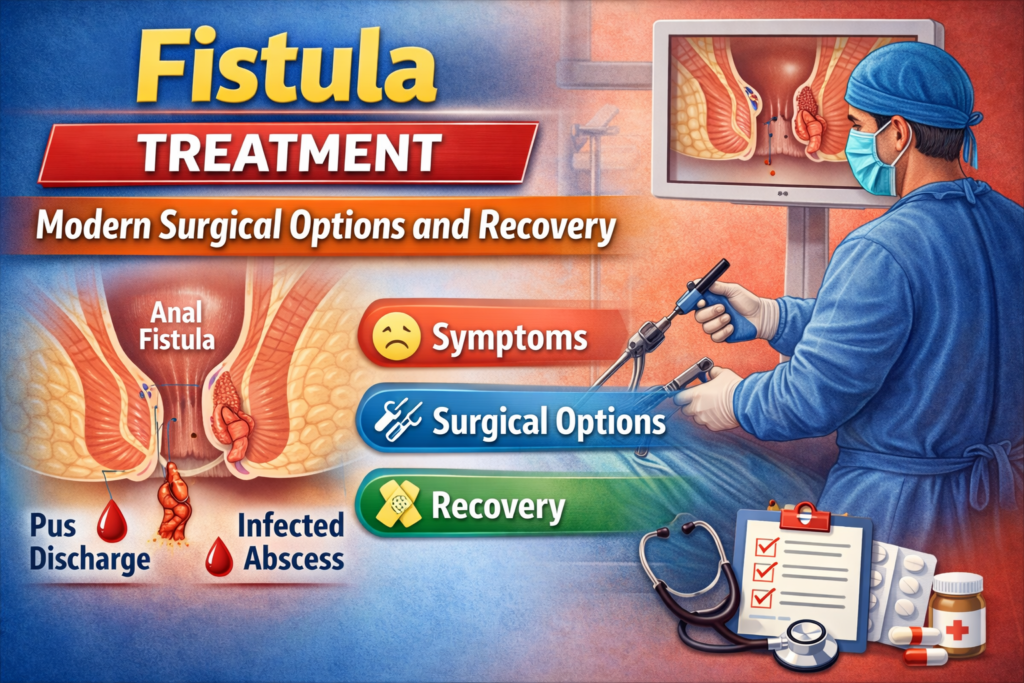
Anal fistula is a painful and uncomfortable medical condition that affects many people but is often ignored due to embarrassment or lack of awareness. Many patients delay treatment, which can make the problem worse over time. Understanding the symptoms, causes, and modern treatment options can help patients seek timely medical care and avoid complications.
With advances in medical science, fistula can now be treated effectively using modern surgical techniques that offer faster recovery and minimal discomfort. If you are searching for an experienced Laparoscopic Surgeon in Kota, Dr Dinesh Jindal at Jindal Hospital Kota provides advanced treatment options for anorectal and laparoscopic conditions.
In this article, we will explain anal fistula, its symptoms, causes, complications, modern surgical treatments, and recovery process in simple and patient-friendly language.
What is an Anal Fistula?
An anal fistula is a small tunnel that develops between the inside of the anus and the skin around the anus. It usually forms after an infection in the anal glands that leads to an abscess (a collection of pus).
When the abscess drains or bursts, a tunnel may remain between the infected gland and the outer skin. This tunnel is called a fistula.
Anal fistula usually does not heal on its own and often requires medical or surgical treatment.
Common Symptoms of Anal Fistula
People with anal fistula may experience several uncomfortable symptoms. These symptoms may vary depending on the severity of the condition.
Typical Symptoms Include
- Pain and swelling near the anus
- Pus or fluid discharge from the anal area
- Irritation or redness around the anus
- Recurrent anal abscess
- Pain while sitting or passing stool
- Fever in some cases
- Bleeding from the anal opening
Some patients also notice a small opening or hole near the anus from where discharge may occur.
If these symptoms persist, it is important to consult an experienced doctor such as Dr Dinesh Jindal, a trusted Laparoscopic Surgeon in Kota at Jindal Hospital Kota.
Causes of Anal Fistula
Most anal fistulas develop due to infection in the anal glands.
Common Causes Include
- Anal abscess infection
- Blocked anal glands
- Crohn’s disease (inflammatory bowel disease)
- Tuberculosis infection
- Injury or trauma to the anal area
- Previous anal surgery
The most common cause is an untreated or poorly treated anal abscess.
When the infection spreads and forms a tunnel between the anal canal and skin, it leads to fistula formation.
Risk Factors for Anal Fistula
Certain conditions increase the risk of developing anal fistula.
Important Risk Factors
- Chronic constipation
- Poor hygiene
- Weak immune system
- Diabetes
- Inflammatory bowel diseases
- Previous anorectal infections
Patients who experience repeated infections should seek medical advice early to prevent complications.
Why Early Treatment is Important
Many patients delay treatment due to embarrassment or fear of surgery. However, ignoring fistula can lead to serious problems.
Possible Complications
If left untreated, anal fistula can cause:
- Recurrent infections
- Continuous pus discharge
- Severe pain and discomfort
- Formation of multiple fistula tracts
- Spread of infection to nearby tissues
Early diagnosis and treatment can prevent these complications and ensure quicker recovery.
Consulting a specialist such as Dr Dinesh Jindal at Jindal Hospital Kota can help patients receive the right treatment at the right time.
How Anal Fistula is Diagnosed
Proper diagnosis helps doctors understand the exact location and complexity of the fistula.
Diagnostic Methods
Doctors may use:
- Physical examination
- Digital rectal examination
- MRI scan
- Endoanal ultrasound
- Fistulography in some cases
These tests help determine the type and depth of the fistula tract, which is important for selecting the correct surgical treatment.
An experienced Laparoscopic Surgeon in Kota can accurately diagnose and plan the best treatment approach.
Modern Surgical Treatments for Anal Fistula
Unlike some other anorectal conditions, fistulas rarely heal with medicines alone. Most patients require a surgical procedure.
Fortunately, modern surgical techniques have made fistula treatment safer and more effective.
1. Fistulotomy
Fistulotomy is one of the most common procedures used to treat simple fistulas.
In this surgery:
- The fistula tract is opened
- The infected tissue is cleaned
- The area is allowed to heal naturally
This procedure has a high success rate for simple fistulas.
2. Laser Fistula Surgery
Laser treatment is a modern and minimally invasive procedure.
Advantages include:
- Less pain
- Minimal bleeding
- Faster recovery
- Short hospital stay
Many patients prefer laser procedures because they allow quicker return to normal activities.
3. Seton Placement
For complex fistulas, doctors may place a seton thread inside the fistula tract.
This helps:
- Drain infection
- Gradually heal the tract
- Prevent damage to anal muscles
4. Advanced Surgical Techniques
Modern hospitals may use advanced procedures such as:
- LIFT procedure (Ligation of Intersphincteric Fistula Tract)
- VAAFT (Video Assisted Anal Fistula Treatment)
These techniques are designed to treat fistulas while preserving the anal muscles.
At Jindal Hospital Kota, modern technology and experienced surgical care help ensure safe and effective treatment.
Recovery After Fistula Surgery
Recovery time depends on the type of surgery and the severity of the fistula.
However, most patients recover smoothly with proper care.
What to Expect After Surgery
Patients may experience:
- Mild pain for a few days
- Small amount of discharge during healing
- Gradual improvement in symptoms
Most patients can return to daily activities within a short period.
Post-Surgery Care Tips
To ensure faster healing:
- Maintain proper hygiene
- Take prescribed medicines regularly
- Eat a fiber-rich diet
- Drink plenty of water
- Avoid constipation
Following the doctor’s instructions is essential for smooth recovery.
Other Conditions Treated by Laparoscopic Surgery
In addition to fistula treatment, laparoscopic surgery is widely used for many abdominal conditions.
An experienced Laparoscopic Surgeon in Kota can perform several advanced procedures.
Hernia Surgery
A hernia occurs when internal organs push through weak muscles.
Modern Hernia Surgery in Kota uses laparoscopic techniques that provide:
- Smaller incisions
- Less pain
- Faster recovery
Gallbladder Surgery
Gallstones can cause severe abdominal pain and digestive problems.
Laparoscopic Gallbladder Surgery in Kota is a safe and effective way to remove the gallbladder using small incisions.
This procedure allows patients to recover quickly and return to normal activities sooner.
Piles Treatment
Many patients also suffer from hemorrhoids, commonly known as piles.
Advanced Piles Treatment in Kota includes minimally invasive techniques such as laser surgery and stapler procedures, which offer quick recovery and long-term relief.
Why Choose Dr Dinesh Jindal?
Choosing the right surgeon is extremely important for successful treatment.
Dr Dinesh Jindal is a highly experienced Laparoscopic Surgeon in Kota with more than 20 years of experience in laparoscopic surgery.
He specializes in treating several conditions including:
- Anal fistula
- Piles Treatment in Kota
- Hernia Surgery in Kota
- Gallbladder Surgery in Kota
Patients trust Jindal Hospital Kota because of its advanced medical facilities, experienced surgical team, and patient-centered care.
When Should You See a Doctor?
If you experience the following symptoms, you should consult a doctor immediately:
- Persistent pain near the anus
- Pus or fluid discharge
- Recurrent abscess
- Swelling or redness around the anal area
- Fever associated with anal infection
Early medical consultation helps prevent complications and ensures better treatment outcomes.
Conclusion
Anal fistula is a painful condition that can significantly affect daily life if left untreated. The good news is that modern medical advancements have made fistula treatment safer, faster, and more effective than ever before.
Understanding the symptoms and seeking early treatment can help prevent complications and improve quality of life.
If you are looking for an experienced Laparoscopic Surgeon in Kota, consult Dr Dinesh Jindal at Jindal Hospital Kota. With over 20 years of experience in laparoscopic surgery, he provides advanced care for Piles Treatment in Kota, Hernia Surgery in Kota, Gallbladder Surgery in Kota, and fistula treatment.
Book Your Consultation Today
Do not ignore symptoms like pain, swelling, or discharge near the anal area.
Visit Jindal Hospital Kota and consult Dr Dinesh Jindal for expert diagnosis and modern treatment options. Early treatment can help you recover faster and live a healthier, pain-free life.