
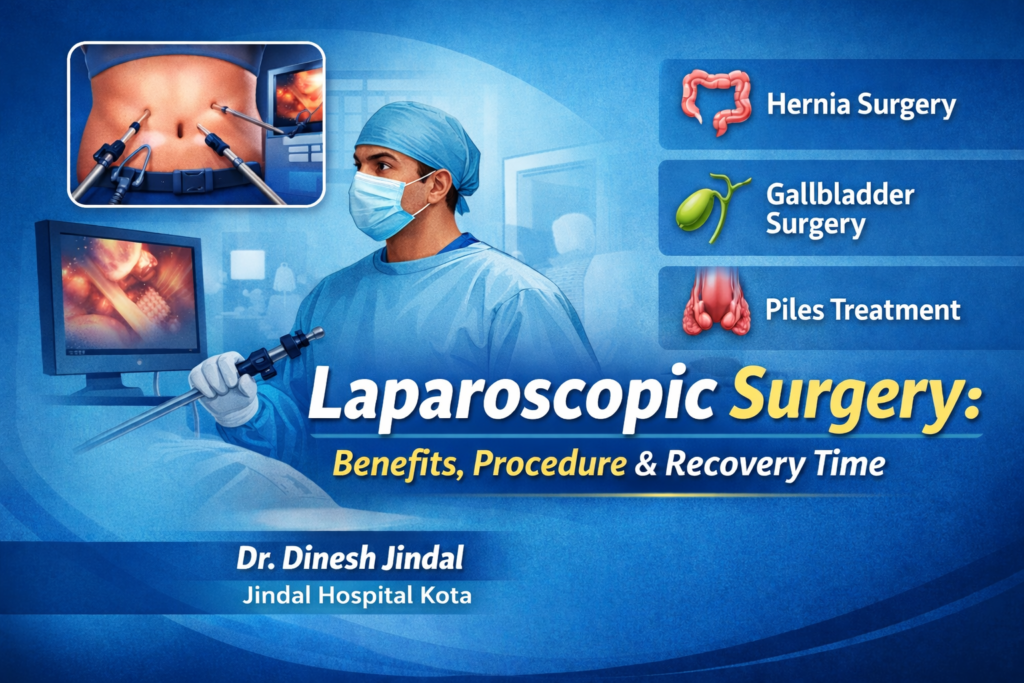
Modern medical technology has transformed the way surgeries are performed. One of the most important advancements in surgical treatment is laparoscopic surgery, also known as minimally invasive surgery. This technique allows surgeons to perform complex procedures with very small incisions, resulting in faster recovery, less pain, and minimal scarring.
If you are searching for a trusted Laparoscopic Surgeon in Kota, understanding how laparoscopic surgery works can help you make informed decisions about your health.
At Jindal Hospital Kota, experienced laparoscopic surgeon Dr Dinesh Jindal, who has more than 20 years of experience in laparoscopic surgery, performs advanced procedures for conditions such as hernia, gallbladder problems, piles, fissure, and fistula using modern techniques.
In this article, we will explain what laparoscopic surgery is, how it works, its benefits, recovery time, and why it is becoming the preferred surgical method today.
What is Laparoscopic Surgery?
Laparoscopic surgery is a modern surgical technique where operations are performed through small cuts instead of large incisions.
During the procedure, the surgeon uses a special instrument called a laparoscope, which is a thin tube with a small camera and light attached to it. This camera sends real-time images to a monitor, allowing the surgeon to clearly see the internal organs while performing the surgery.
Unlike traditional open surgery, where a large incision is required, laparoscopic surgery usually involves 2–4 small incisions of about 0.5–1 cm.
Common Conditions Treated with Laparoscopic Surgery
Laparoscopic surgery is widely used for many medical conditions, including:
- Hernia Surgery in Kota
- Gallbladder Surgery in Kota
- Appendix removal
- Intestinal surgeries
- Gynecological procedures
- Diagnostic abdominal procedures
At Jindal Hospital Kota, these surgeries are performed using advanced laparoscopic technology to ensure better patient outcomes.
How Does Laparoscopic Surgery Work?
Understanding the process can help patients feel more comfortable before undergoing surgery.
Step-by-Step Procedure
1. Small Incisions are Made
The surgeon makes small incisions in the abdomen through which surgical instruments and the laparoscope are inserted.
2. Carbon Dioxide Gas is Used
The abdomen is gently inflated with carbon dioxide gas. This creates space inside the body so the surgeon can clearly see and operate on the organs.
3. Camera Provides Clear View
The laparoscope camera sends high-definition images to a monitor, allowing the surgeon to perform the procedure with precision.
4. Surgical Instruments are Used
Specialized instruments are inserted through the small incisions to complete the surgery.
5. Incisions are Closed
Once the surgery is completed, the instruments are removed and the small cuts are closed with stitches or surgical tape.
This entire process usually results in minimal tissue damage and faster healing compared to traditional surgery.
Advantages of Laparoscopic Surgery
One of the biggest reasons laparoscopic surgery is widely recommended today is the number of benefits it offers compared to traditional open surgery.
1. Smaller Incisions
Traditional surgery may require large cuts of several centimeters, whereas laparoscopic surgery uses tiny incisions. This means less trauma to the body.
2. Less Pain After Surgery
Patients typically experience less post-operative pain, which reduces the need for strong pain medications.
3. Faster Recovery
Recovery time is significantly shorter. Many patients can return to normal activities much sooner.
4. Minimal Scarring
Because the cuts are very small, visible scars are minimal, which is another advantage for patients.
5. Lower Risk of Infection
Smaller incisions also mean lower chances of infection and complications.
6. Shorter Hospital Stay
Many laparoscopic procedures allow patients to go home within 24–48 hours.
This is why many patients searching for a Laparoscopic Surgeon in Kota prefer minimally invasive surgery.
Hernia Surgery with Laparoscopy
What is a Hernia?
A hernia occurs when an internal organ pushes through a weak spot in the surrounding muscle or tissue.
Common symptoms include:
- A visible lump or swelling
- Pain or discomfort while lifting or bending
- Burning or aching sensation
- Heaviness in the abdomen
Laparoscopic Hernia Surgery
In Hernia Surgery in Kota, laparoscopic techniques are increasingly used because they allow surgeons to repair the hernia using small incisions and a surgical mesh.
Benefits include:
- Less pain
- Faster recovery
- Lower risk of recurrence
- Early return to normal activities
At Jindal Hospital Kota, Dr Dinesh Jindal performs advanced laparoscopic hernia repairs with high success rates.
Gallbladder Surgery Using Laparoscopy
What is the Gallbladder?
The gallbladder is a small organ located below the liver that stores bile used in digestion.
Sometimes gallstones form in the gallbladder, causing symptoms such as:
- Severe abdominal pain
- Nausea and vomiting
- Indigestion
- Pain after eating fatty foods
Laparoscopic Gallbladder Removal
The most common treatment for gallstones is laparoscopic gallbladder removal, also known as cholecystectomy.
During Gallbladder Surgery in Kota, the gallbladder is removed using small incisions and specialized instruments.
Advantages include:
- Short hospital stay
- Faster healing
- Minimal scarring
- Lower complication risk
At Jindal Hospital Kota, Dr Dinesh Jindal uses advanced laparoscopic techniques to ensure safe and effective gallbladder surgery.
Laparoscopic Procedures for Piles
Another condition where modern surgical techniques are helpful is piles.
What are Piles?
Piles, also known as hemorrhoids, are swollen veins in the rectum or anus that can cause:
- Pain
- Bleeding during bowel movements
- Itching
- Discomfort while sitting
Advanced surgical and minimally invasive techniques are now available for Piles Treatment in Kota, which provide faster recovery and minimal pain.
At Jindal Hospital Kota, patients receive proper evaluation and the most suitable treatment options depending on the severity of the condition.
Recovery Time After Laparoscopic Surgery
Recovery is one of the biggest advantages of minimally invasive surgery.
Hospital Stay
Most patients stay in the hospital for 1–2 days, depending on the type of surgery.
Returning to Daily Activities
Patients can usually return to light activities within 3–5 days.
Full Recovery
Complete recovery generally takes 1–2 weeks, which is significantly faster than traditional open surgery that may take 4–6 weeks.
However, recovery may vary depending on:
- Type of surgery
- Patient’s age
- Overall health
- Post-surgery care
Patients treated by an experienced Laparoscopic Surgeon in Kota often experience smoother and quicker recovery.
Is Laparoscopic Surgery Safe?
Yes, laparoscopic surgery is considered very safe and widely used around the world.
However, like any surgical procedure, it should always be performed by an experienced and qualified surgeon.
Why Experience Matters
An experienced surgeon ensures:
- Accurate diagnosis
- Proper surgical planning
- Reduced risk of complications
- Faster recovery
At Jindal Hospital Kota, surgeries are performed by Dr Dinesh Jindal, a highly experienced laparoscopic surgeon with more than 20 years of expertise in laparoscopic surgery.
His experience and use of modern surgical techniques help ensure safe procedures and better outcomes for patients.
Why Choose Jindal Hospital Kota for Laparoscopic Surgery?
Choosing the right hospital and surgeon plays a major role in successful treatment.
Jindal Hospital Kota is known for providing advanced surgical care with a focus on patient safety and comfort.
Key Reasons Patients Choose Jindal Hospital
- Experienced surgeon Dr Dinesh Jindal
- More than 20 years of laparoscopic surgery experience
- Modern minimally invasive surgical techniques
- Advanced equipment and surgical facilities
- Personalized patient care
- Treatment for hernia, gallbladder, piles, fissure, and fistula
Patients from Kota and nearby areas trust Jindal Hospital Kota for safe and effective surgical treatment.
When Should You Consult a Laparoscopic Surgeon?
You should consult a doctor if you experience symptoms such as:
- Persistent abdominal pain
- Swelling or lump in the abdomen or groin
- Frequent gallbladder attacks
- Bleeding during bowel movements
- Severe discomfort while sitting or passing stool
Early diagnosis can help prevent complications and ensure timely treatment.
Consulting an experienced Laparoscopic Surgeon in Kota can help you understand the best treatment options available.
Final Thoughts
Laparoscopic surgery has revolutionized the field of modern medicine. With smaller incisions, faster recovery, less pain, and minimal scarring, it has become the preferred choice for many surgical treatments today.
Procedures like Hernia Surgery in Kota, Gallbladder Surgery in Kota, and Piles Treatment in Kota are now safer and more comfortable for patients thanks to minimally invasive techniques.
At Jindal Hospital Kota, Dr Dinesh Jindal, with over 20 years of experience in laparoscopic surgery, provides advanced surgical care using modern techniques designed for faster recovery and better results.
Book a Consultation at Jindal Hospital Kota
If you or your family member is experiencing symptoms related to hernia, gallbladder problems, or piles, it is important to consult an experienced specialist.
Visit Jindal Hospital Kota and consult Dr Dinesh Jindal, a trusted Laparoscopic Surgeon in Kota, to receive the right diagnosis and treatment.
Early consultation can lead to faster recovery and better health.
Contact Jindal Hospital Kota today to schedule your appointment.